
What Is an Arbitrage Trader?
An arbitrage trader exploits price differences of identical assets across different markets to generate risk-free profit. I have guided my clients through hundreds of arbitrage trades where simultaneous buying and selling captured inefficiencies without market exposure. This strategy requires rapid execution, deep market knowledge, and sophisticated technology to succeed consistently.
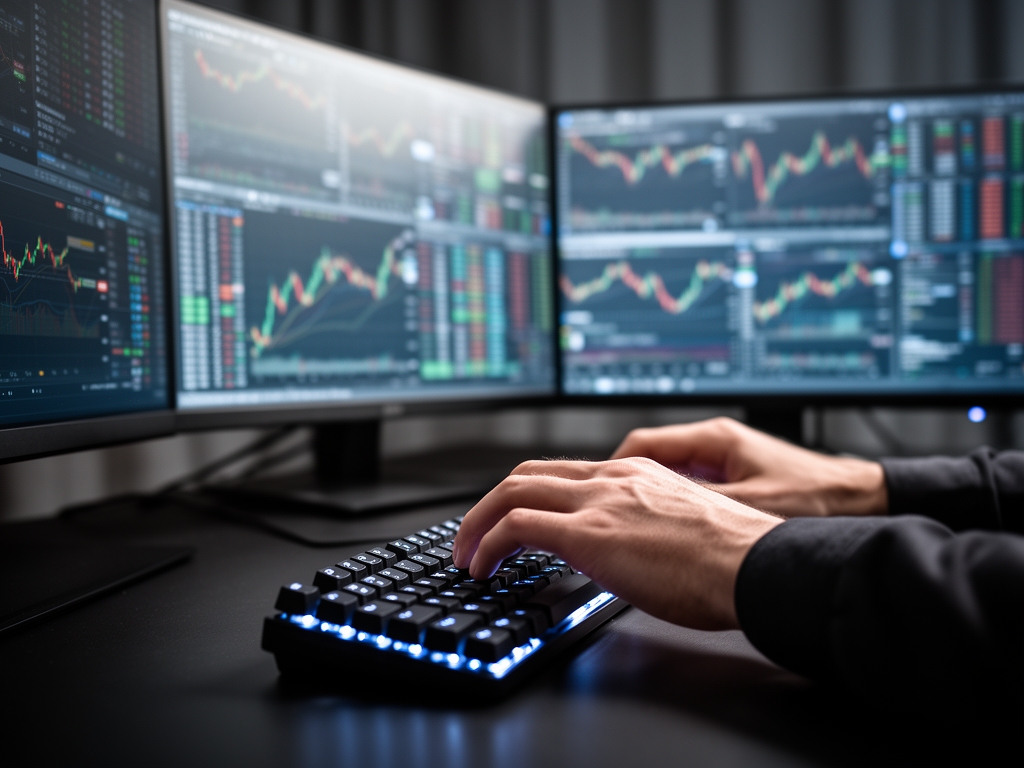
In my experience, successful arbitrage traders operate at the intersection of finance and technology. They monitor multiple exchanges, analyze order books in real time, and deploy algorithms to act within milliseconds. The core function remains unchanged: buy low on one exchange, sell high on another, and pocket the spread.
How Does an Arbitrage Trader Work?
An arbitrage trader identifies price discrepancies, executes offsetting trades instantly, and locks in profit regardless of market direction. I have seen my clients use co-located servers and direct market access to reduce latency to under 1 millisecond, ensuring they capture fleeting opportunities before they vanish.
The process involves three critical steps: detection, execution, and settlement. Detection scans exchanges for mispriced assets using statistical models. Execution sends buy and sell orders simultaneously through optimized routing. Settlement confirms both legs cleared, realizing the arbitrage profit. Any delay risks the opportunity disappearing.
What Skills Does an Arbitrage Trader Need?
An arbitrage trader needs quantitative analysis, programming proficiency, and market microstructure expertise. I require my junior traders to master Python, C++, and SQL while understanding exchange fee structures and order book dynamics. These skills enable them to build and refine proprietary trading systems.
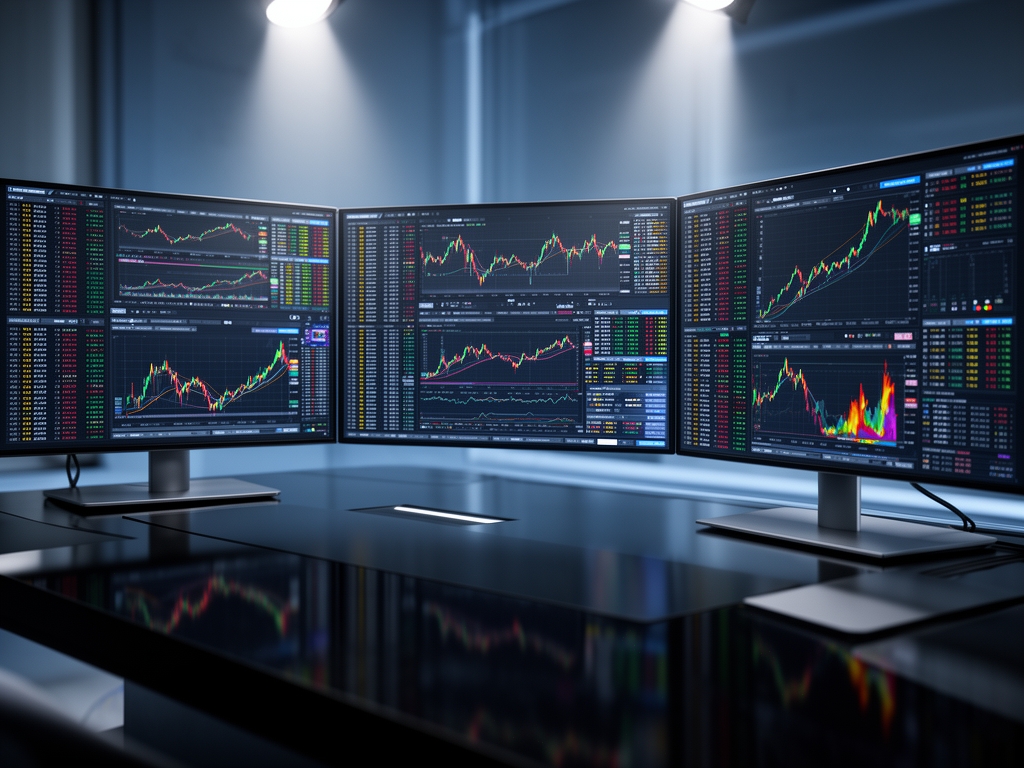
Beyond technical skills, psychological resilience defines top performers. Arbitrage trading involves frequent small wins and occasional losses from execution slippage or unexpected volatility. My most successful clients maintain strict risk limits, review every trade post-mortem, and adapt strategies as market conditions evolve.
What Tools Do Arbitrage Traders Use?
Arbitrage traders use low-latency trading platforms, real-time data feeds, and algorithmic execution systems. I have configured trading stacks for my clients that include FIX protocol connections, FPGA-based order processors, and co-location services at major exchanges like NYSE and NASDAQ.
The essential toolkit comprises: 1) Market data subscriptions aggregating prices from all relevant venues, 2) Smart order routers that split trades to minimize market impact, 3) Risk management systems that monitor position limits and P&L in real time, 4) Backtesting environments to validate strategies against historical data. Without these components, consistent arbitrage trading is impossible.
| Tool Category | Specific Tools | Purpose |
|---|---|---|
| Data Infrastructure | Tick data feeds, WebSocket APIs, Historical databases | Provide real-time and historical price data for opportunity detection |
| Execution Systems | Direct market access, Smart order routers, Algorithmic trading engines | Execute trades with minimal latency and optimal routing |
| Risk Management | Real-time P&L trackers, Position limit monitors, Volatility alerts | Ensure trades stay within predefined risk parameters |
| Analysis & Development | Python/R studios, Backtesting frameworks, Strategy optimization tools | Develop, test, and refine arbitrage strategies |
What Are the Main Types of Arbitrage Trading?
The main types of arbitrage trading are spatial, triangular, and statistical arbitrage. Spatial arbitrage exploits price differences of the same asset across different exchanges. Triangular arbitrage involves three currency pairs to profit from exchange rate inconsistencies. Statistical arbitrage uses mathematical models to identify mean-reverting price relationships.
I have implemented all three types for my clients across various asset classes. Spatial arbitrage dominates in crypto markets where exchange fragmentation creates frequent inefficiencies. Triangular arbitrage works best in highly liquid forex pairs like EUR/USD/GBP. Statistical arbitrage requires significant capital and is typically employed by hedge funds trading equities or futures.
What Risks Do Arbitrage Traders Face?
Arbitrage traders face execution risk, liquidity risk, and regulatory risk. Execution risk occurs when one leg of the trade fails to fill, leaving an unhedged position. Liquidity risk arises when market depth is insufficient to execute the full trade size without slippage. Regulatory risk involves sudden rule changes affecting trading practices.
In my experience, execution risk is the most common challenge. I advise my clients to use atomic swap protocols where available and to size positions according to the minimum liquidity depth across all venues. Liquidity risk management involves scaling into positions gradually and avoiding volatile market periods. Regulatory compliance requires ongoing monitoring of exchange policies and jurisdictional rules.
What is the primary goal of an arbitrage trader?
The primary goal of an arbitrage trader is to generate risk-free profit by exploiting temporary price inefficiencies between markets through simultaneous buy and sell transactions.
How much capital is needed to start arbitrage trading?
Starting arbitrage trading requires a minimum of $10,000 to cover technology costs, exchange fees, and position sizing for meaningful returns, though institutional strategies often deploy millions.
Can retail traders compete with institutional arbitrageurs?
Retail traders can compete in less efficient markets like cryptocurrency exchanges where latency advantages matter less, but institutional players dominate in highly liquid, low-spread environments due to superior technology and capital.
Related Articles
Explore these related topics to deepen your understanding of arbitrage trading and related strategies:
- Arbitrage Trading
- Arbitrage Finder
- Arbitrage Opportunities
- ai arbitrage
- what is ai arbitrage
- ai arbitrage trading
Visit Aiarbit for more information.
arbitrage trader – Quick Overview
| Attribute | Details |
|---|---|
| Topic | arbitrage trader |
| Category | General |